You give a trivia question to your audience. They read it. They move on.
The problem isn't your topic. It's the format. Multiple choice lets people scan and guess. True/false asks for almost nothing. Both formats work, but neither hooks anyone.
Word association trivia does something different. It doesn't hand the answer over. It triggers a mental reach, a half-second where someone's brain fires, connects two ideas, and commits to a response. That's the moment everything changes.
This guide is practical. You'll walk away with questions you can use today, a format that fits your audience, and a clear path to build and post your quiz, fast.
At a glance
- Why word association trivia works differently
- What are the different formats, and how to use each
- How to Build Your Word Association Trivia
- 5 mistakes that kill word association engagement
Word association trivia is wired into the brain
Most trivia tests require recognition; the answer is right there, your brain just has to spot it. Word association tests connection. There's nothing to scan. The player has to produce the answer themselves.
Three things happen when someone hits a good word association question:
- They pause. That pause = attention. You've interrupted the scroll.
- They commit. Replying with one word takes 3 seconds. The friction is just right.
- They argue. When someone answers "Apple → Newton" instead of "Apple → iPhone," the conversation starts itself.
Platform algorithms reward comments and replies more than likes. Word association drives comments naturally, no prompt needed. People just want to drop their answer.
What are the different formats, and how to use each
Not all word association questions look the same. Here are the four core formats. Pick the one that fits your audience and platform.
Format 1: Classic Chain
Give a word. The player says the first related word that comes to mind.
Works best for: live events, icebreakers, team meetings, classroom warmups
How to run it:
- Start with a broad, familiar word
- Players respond verbally or in the comment section
- No answer is technically wrong, but the most common answer wins (or you can vote on it)
Example:

Why it works for content: The variation in responses is the content.
Format 2: What Connects These?
Give three unrelated words. Players find the hidden link.
Works best for: social media posts, quiz videos, pub quiz rounds
How to run it:
- Present three words on screen (or in a caption)
- Give 10–15 seconds for the audience to think
- Reveal the connecting word or concept
Example:
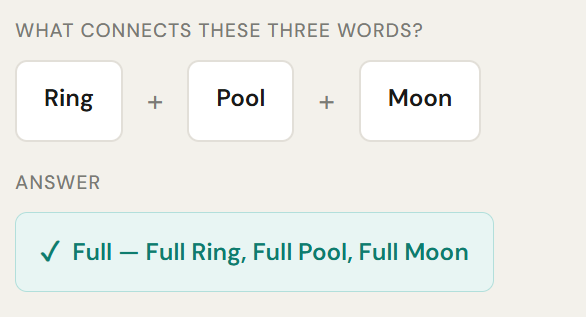
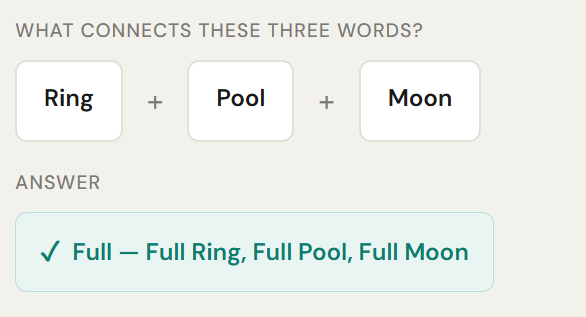
Why this format hooks people: The "I see it now!" moment is dopamine. People share it because they want their friends to feel the same thing.
Format 3: Fill the Association
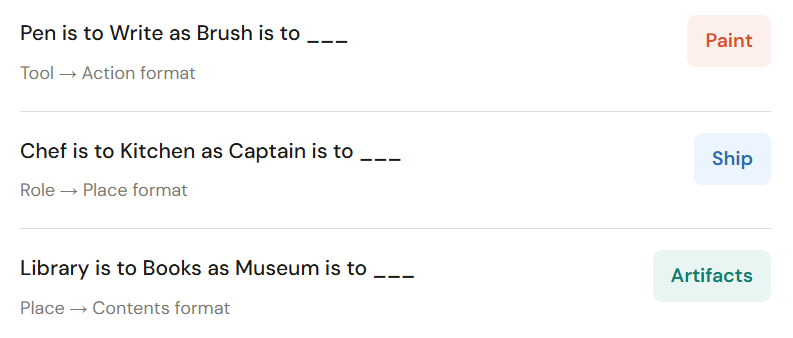
Give a sentence with the association word missing.
Works best for: Instagram carousels, classroom handouts, newsletter quizzes
How to run it:
- Present a setup: "___ is to Night as Dawn is to ___"
- Players fill in the logic, not just guess a word
- Works especially well as video with a countdown timer
Example:
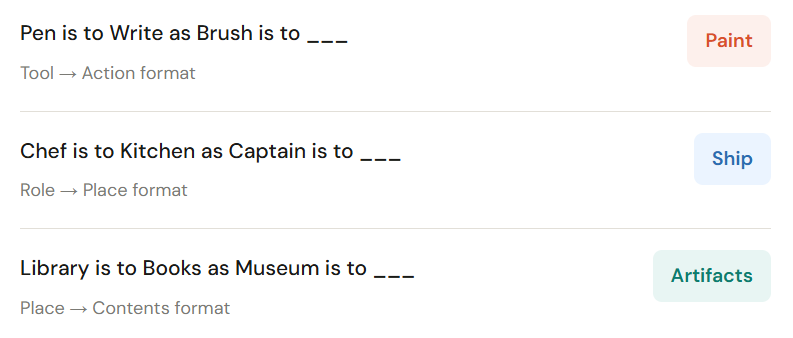
Format 4: Word Ladder (Chain Reaction)
Each answer becomes the next clue.
Works best for: live game shows, classroom competitions, team events
How to run it:
- Give the first word
- Player 1 says an association → that word becomes the next prompt → Player 2 goes
- Anyone who hesitates too long (or can't find a link) is out
Example:
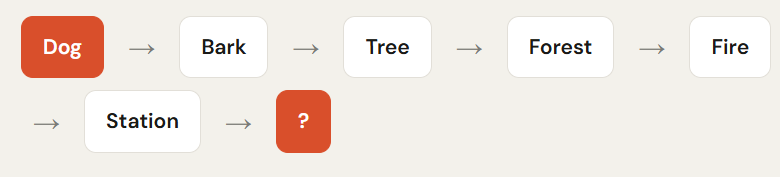
This format works in video too, show the chain on screen, pause before each link, and let viewers guess what comes next.
How to Build Your Word Association Trivia
1. Pick a theme your audience cares about
Broad = ignored. Specific = engaging.
Think:
- “90s Cartoon Network nostalgia”
- “Kerala food cravings”
- “Startup vs college life”
The goal: 👉 Make your audience feel “this is so me.”
2. Pick your Format
Decide how people will experience it:
- Comments (posts): Quick, interactive, scroll-stopping
- Stories: Direct replies, more personal engagement
- Video (Reels/Shorts): High retention, best reach
- Live (quiz/kahoot): Real-time fun
Same questions → different experience depending on format.
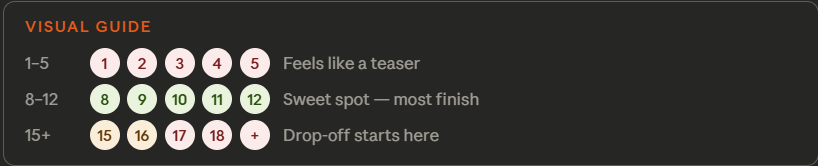
3. Aim for 8–12 questions per round and set the difficulty level
Keep it tight and addictive.
- 8–12 questions per round = sweet spot
Add a "difficulty arc."
- Build a difficulty arc:
- Start easy (hook them)
- Go medium (keep momentum)
- End with a twist (make it memorable)
👉 Each correct answer = dopamine → keeps them watching
4. Choose output format (post/video / live)
Trivia by Typito AI gives you two ways to start. Both are fast; one gives you more control, the other gets you to a finished video even faster.
Option A: Custom prompt (you write the brief)
Click the custom template tile and write a detailed prompt. Include: topic, format, number of questions, and difficulty level.
Example:"Generate a word association trivia quiz on 90s pop culture brands. 8 questions, 5 easy chains, 3 "What Connects These?" puzzles. Use a fun, colorful theme suited for Instagram Reels. Include the answer reveal with a timer."
Option B: Pick a recipe (Typito AI writes the prompt)
Browse ready-made quiz templates: Word Association → describe your topic → Typito AI builds the full prompt for you → Review, edit if needed, hit generate.
Pin your answer to guide engagement
Add captions (many watch on mute)
Keep pause + suspense in videos (this is the hook)
Always add a clear CTA → “First word that comes to mind 👇”
5 mistakes that kill word association engagement
❌ Making the connection too obvious: If everyone answers in 2 seconds, there's no payoff. Add one layer of indirection.
❌ Skipping the reveal: The reveal is the moment. It validates the audience, triggers the dopamine hit, and keeps people watching. Always show it.
❌ No CTA on the post: "What do you think?" gets scrolled past. "Drop your answer 👇" gets replies. The difference is huge.
❌ Too many valid answers: If the connection could be five different things, the reveal lands flat. Pick connections with one clear, satisfying answer.
FAQs
multiple-choice
Answer: Word association trivia is a quiz format where players respond to a word, phrase, or set of clues by identifying a connection or supplying a related word, rather than selecting from preset options. It relies on active recall and pattern recognition, making it more engaging than standard multiple-choice formats.
Q2. How is word association trivia different from regular trivia?
Answer: Regular trivia tests whether you know a fact. Word association trivia tests whether you can connect two ideas. There's no list to scan; you have to produce the answer yourself. That extra step of mental effort is exactly what makes it more memorable and engaging.
Q3. What topics work best for word association trivia?
Answer: Topics where people feel they should know the answer, but actually have to think. Pop culture (brand origins, famous taglines, TV callbacks), nostalgia, geography surprises, food facts, and sports records all perform well. The sweet spot is "familiar territory, surprising detail."
Still getting 3 replies on your trivia?
Yeah… It’s not the idea. It’s how you’re formatting it