You're running a team meeting tomorrow.
You want to open with trivia to break the ice.
But you're stuck on: Which questions are actually safe? How do you structure it for Zoom? What if someone feels put on the spot?
The best trivia questions for work don't rely on personal disclosure or risky topics. It creates space for people to participate without pressure, focuses on shared knowledge instead of individual exposure, and works equally well whether your team is remote, hybrid, or in-office.
Most workplace trivia advice focuses on why it matters. This guide focuses on what to do: which question types work, how to structure a 10-minute session, and what to avoid so no one goes quiet mid-call.
At a Glance
- What Is Work-Appropriate Trivia?
- What Makes Trivia "Work-Appropriate"?
- Work-Appropriate Team Trivia Questions
- Formats Built for Remote and Hybrid Teams
- How to host your next trivia at work
- Making Trivia a Regular Engagement Tool
- People Also Ask
What Is Work-Appropriate Trivia?
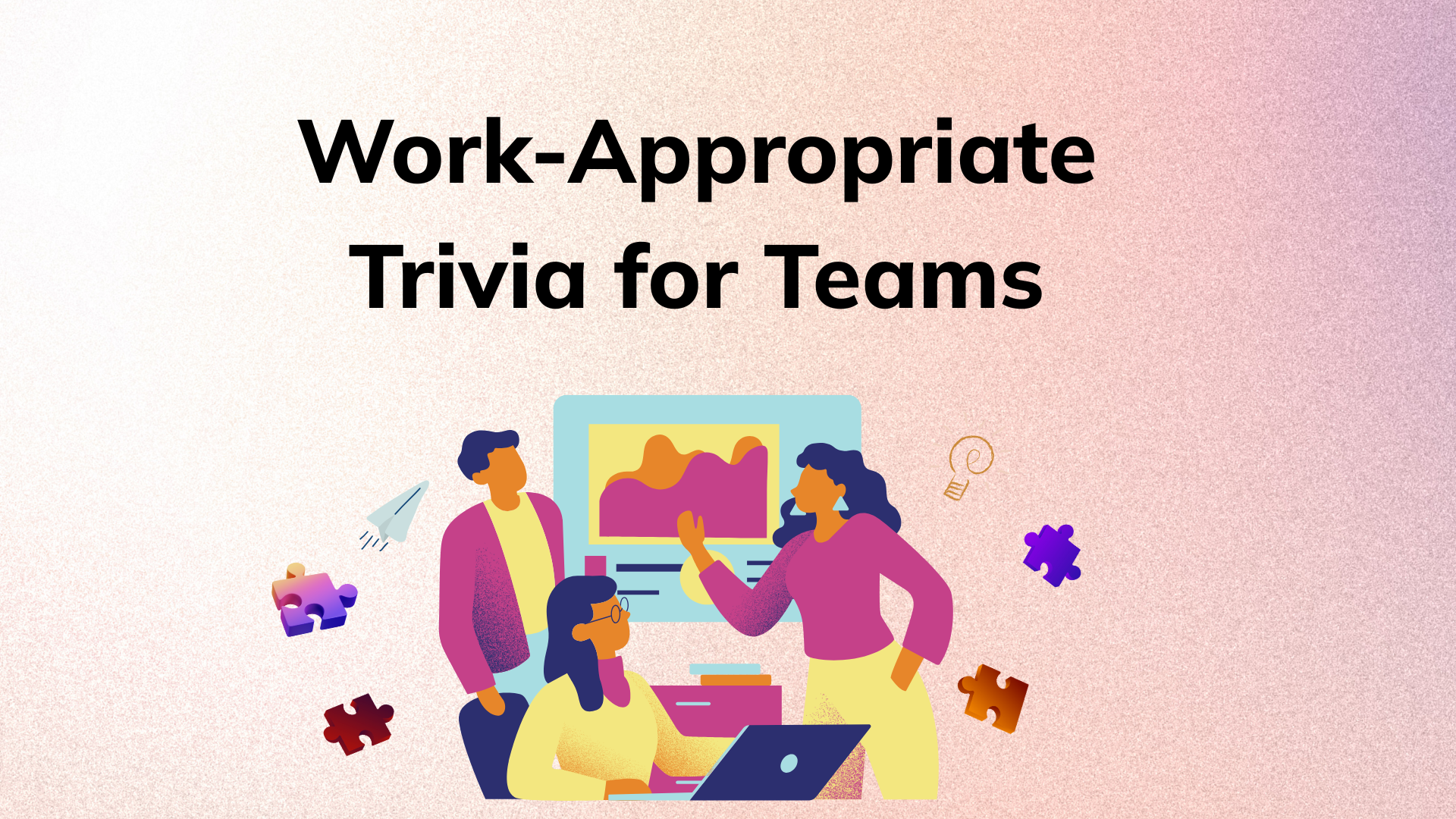
Work-appropriate trivia uses questions based on shared knowledge—general facts, pop culture, industry trends—that anyone can attempt without disclosing personal information. It's designed for psychological safety: no cultural assumptions, no insider knowledge, no prompts that make people uncomfortable. The goal is optional participation and low-pressure engagement, not testing expertise.
What Makes Trivia "Work-Appropriate"?
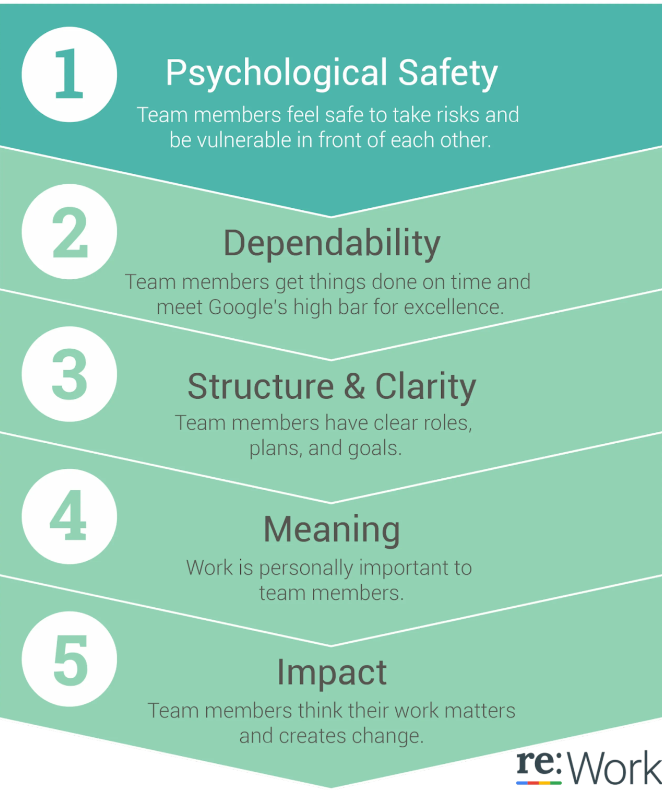
Work-appropriate trivia is built on psychological safety.
Google's Project Aristotle study analyzed hundreds of teams over two years and found that psychological safety was the single most important factor distinguishing high-performing teams.
What this means for trivia:
✅ People participate when they feel safe from judgment
✅ Questions should focus on shared knowledge, not personal disclosure
✅ Optional participation beats mandatory engagement every time
What to avoid:
❌ Questions requiring cultural assumptions
❌ Prompts about personal habits or family life
❌ Insider knowledge that excludes parts of your team
The goal isn't to test knowledge, it's to create a moment where participation feels safe.
Why Interactive Content Drives Participation?
Interactive content generates more engagement than static content. When teams shift from watching to participating, they stay engaged longer.
Key findings from HubSpot Research:
- Interactive content creates "reusable" value with repeat engagement
- 77% of marketers see repeat visits from interactive formats
- 73% agree that interactive elements enhance message retention
Work-Appropriate Team Trivia Questions
General Knowledge
Best for: Mixed seniority teams | Works in any format (live Zoom, Slack, or async).
When to use: Meeting openers or warm-ups when you need everyone to feel included from the start.
- What is the capital of Australia?
Answer: Canberra - How many bones are in the adult human body?
Answer: 206 - Which country has the most time zones?
Answer: France (12 time zones, including overseas territories) - What is the smallest country in the world?
Answer: Vatican City - What language has the most native speakers worldwide?
Answer: Mandarin Chinese
Pop Culture
Best for: Cross-generational teams | Works well for live video calls with visual elements.
When to use: Mid-meeting energizers when you need to shift tone or re-engage attention.
- Which artist has won the most Grammy Awards in history?
Answer: Beyoncé - Who painted the Mona Lisa?
Answer: Leonardo da Vinci - What is the best-selling music album of all time?
Answer: Thriller by Michael Jackson - What was the first Pixar movie ever released?
Answer: Toy Story (1995) - Which artist has the most streams on Spotify?
Answer: Taylor Swift
Workplace & Industry
Best for: Professional development sessions and fun office trivia questions | Great for async Slack trivia or team channels.
When to use: All-hands meetings or quarterly check-ins to reinforce industry awareness.
- Name the company that introduced the first commercially available lithium-ion battery in 1991.
Answer: Sony - Which company was the first to reach a $1 trillion market cap? Answer: Apple (2018)
- In what year was Microsoft founded?
Answer: 1975 - What year did the first iPhone launch?
Answer: 2007 - Which company's original name was "Backrub"?
Answer: Google
Science & Nature
Best for: Teams with varied educational backgrounds | Works well in team breakout discussions.
When to use: Friday wrap-ups or low-stakes sessions where curiosity beats correctness.
- How many hearts does an octopus have?
Answer: Three - What is the most abundant gas in Earth's atmosphere?
Answer: Nitrogen (about 78%) - What is the only metal that is liquid at room temperature?
Answer: Mercury - What element is the most commonly used to create nuclear energy? Answer: Uranium
- What is the name of our galaxy?
Answer: The Milky Way
What this looks like in practice:
Instead of presenting team updates in slides, turn key points into team-building trivia questions. Instead of asking people to read policy changes, quiz them on the highlights.
Participation drives retention.
Why these work:
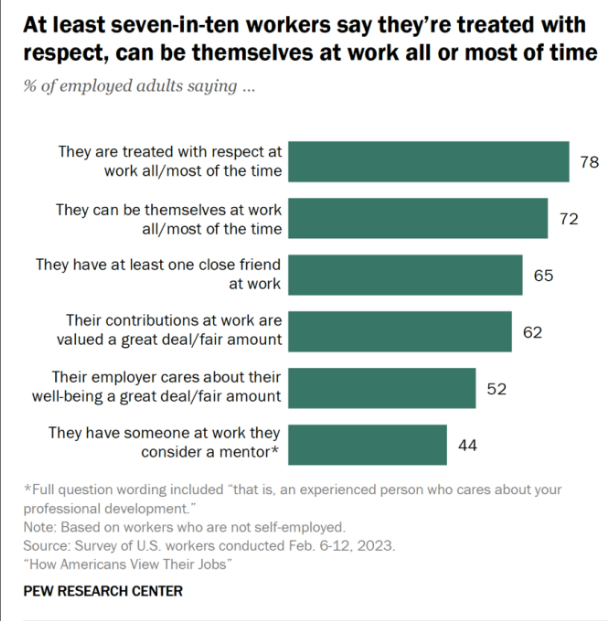
Pew Research found that 78% of workers say being treated with respect at work matters most to job satisfaction. Inclusive question design is respect in action.
Formats Built for Remote and Hybrid Teams
1. Timed Rounds⏰
- Give teams 30 seconds to discuss and submit
- Keeps energy high without adding pressure
- Works well in breakout rooms or main sessions
2. Multiple-Choice Options📜
- Lowers the barrier to participation
- Reduces anxiety about being "wrong."
- Makes guessing feel acceptable
3. Team-Based Answers 👥
- Removes individual spotlight
- Encourages quick collaboration
- Creates shared moments instead of solo performances
How to host your next trivia at work
⏱️Before You Start
- Share the format in advance (3-5 questions per round, team-based, 15 minutes total)
- Clarify that participation is optional
- Set up visual aids (shared screen, timer, chat poll)
📝During the Session
- Start with one easy warm-up question
- Pause between rounds for reactions—don't rush
- Celebrate creative answers, not just correct ones
Trivia by Typito AI can be used to simplify the task.
How it works:
- Click the custom template tile and enter your prompt (topic, quiz type, number of questions, difficulty level)
- Hit Generate Trivia and wait a few seconds
- Trivia by Typito AI builds the video automatically—no editing required
🔖 After You Wrap
Skip rankings. Instead, recognize:
- Most creative guess
- Best team discussion
- Funniest wrong answer
Why this structure works:
Google's research on team effectiveness found that how teams work together matters more than who is on the team. Structure beats difficulty.
Making Trivia a Regular Engagement Tool
Consistency Builds Comfort:
- Monthly all-hands opener
- Friday wrap-up tradition
- Quarterly check-in energizer
Rotate Facilitators:
Different voices bring different energy. Share the load and model team ownership.
Track What Works:
Notice which question types spark discussion. Double down on those formats.
Nielsen's 2024 data showed that employee engagement in community programs nearly doubled when participation felt voluntary and values-aligned, rising to 42.5% from 22.7% in 2023. Regular, optional, clearly structured engagement wins.
The hardest part is starting.
Pick three questions, set a timer, and see what happens.
Try turning one of your next team meetings into a simple trivia round and see how people respond. Most teams respond better to simple, well-structured trivia than elaborate setups.
Keep it light, keep it inclusive, and let participation guide what comes next.
Make it happen with Trivia by Typito AI
People Also Ask
Q1. What are good company trivia questions?
Answer: Focus on accessible workplace knowledge—company founding year, logo origins, mission statement values, or flagship products. Avoid obscure details only long-term employees know. Best questions let everyone participate regardless of tenure or role.
Q3. How does trivia improve team meetings?
Answer: Trivia breaks the ice and creates relaxed energy, especially in virtual team trivia where personal interaction is limited. It encourages bonding, stimulates critical thinking, and makes participants more alert and receptive throughout the meeting.
Q4. What kind of trivia works for remote teams?
Answer: Use visual formats—shared screens, chat polls, timed rounds—to maintain energy. Inclusive team breakout rooms work well for discussion. Tools like Slack or Microsoft Teams can automate delivery, making async trivia easy to run without live facilitation.
Q5. Can you use trivia for team learning?
Answer: Absolutely. Educational trivia reinforces company culture, industry knowledge, or work-relevant topics in an engaging format. It delivers learning benefits while maintaining the low-pressure, interactive feel that drives participation.