You've just posted your best Reel yet. The editing is tight, the hook is strong, the visuals are polished. You refresh your analytics an hour later. 2,000 views. 15 likes. 3 saves. Zero comments.
The view count isn't the problem anymore. It's what happens after someone sees it. They watch for three seconds, register that it's "content," and keep scrolling. No pause. No interaction. No signal to the algorithm that this mattered.
By 2026, creators aren't struggling to get attention as much as they're struggling to hold it. The standard playbook has been to create louder, faster, and more visually stimulating content. But the data suggests a different shift is happening.
Audiences aren't just looking for entertainment; they are looking for involvement.
Instagram quiz reels and other forms of interactive video content are changing how audiences engage with short-form content on social media. Not because they're flashier, but because they ask viewers to do something: think, tap, comment, wait.
This report explores the rise of the quiz reels trend 2026, why interactive formats are outperforming traditional Reels, and how creators and brands can use short-form engagement strategies to turn passive viewers into active participants without chasing gimmicks or burning out their content strategy.
TL;DR: Quiz Reels in 2026
● Quiz Reels are short-form videos that prompt viewers to actively participate by answering a question before a reveal.
● They outperform standard Reels by driving higher completion rates and participation, often resulting in significantly stronger distribution signals, often delivering double-digit lifts in completion and measurable increases in participation rate compared to passive Reels.
● Platforms reward Quiz Reels because taps, comments, and watch-throughs signal stronger user intent than passive views alone.
● For creators, Quiz Reels offer a low-effort way to boost engagement without increasing production complexity.
What Are Quiz Reels?
Quiz Reels are short-form videos that ask viewers to answer a question, make a guess, or choose an option before the video reveals the correct answer.
Unlike traditional Reels, which are passively watched, Quiz Reels require active mental or physical interaction, such as tapping a poll, commenting a guess, or waiting for a reveal.
The Difference Between Normal Reels vs. Quiz Reels
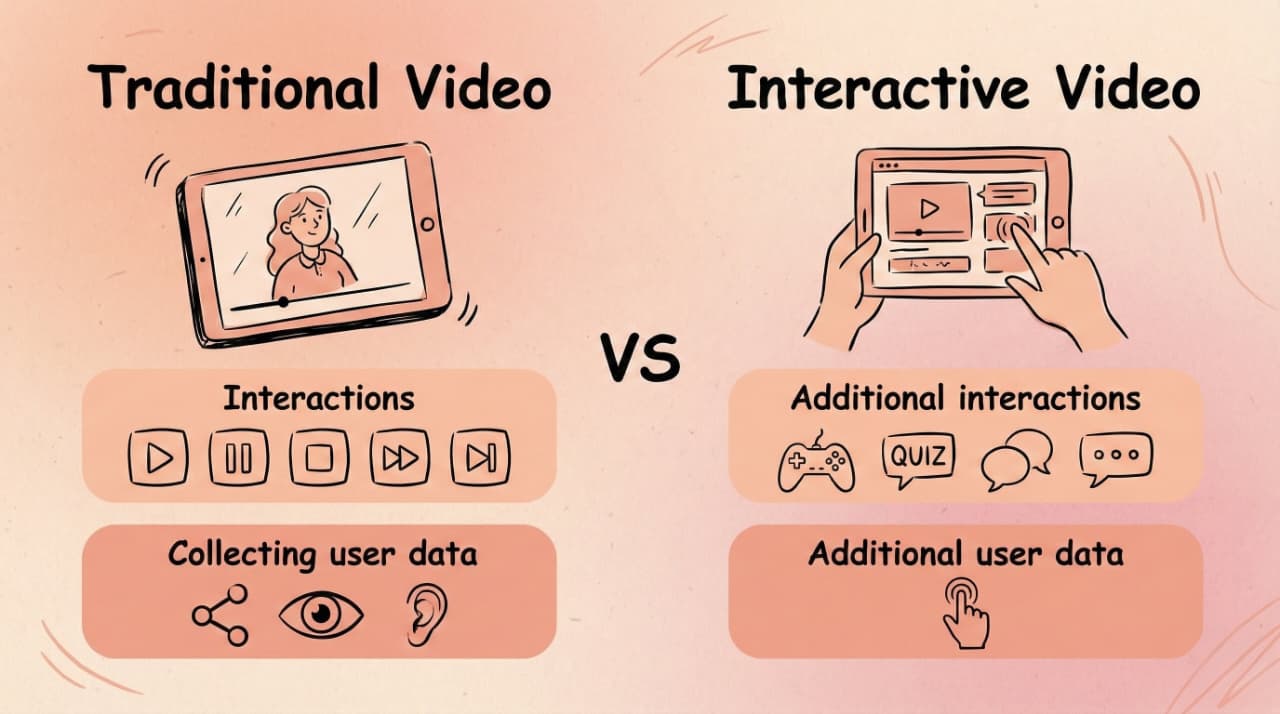
● Normal Reels: Focus on storytelling, aesthetics, or trends. Success is often measured by views and passive likes. The viewer is an audience member. Example: Normal Reel.
● Quiz Reels: Focus on gamification and curiosity. Success is measured by retention (waiting for the answer) and interaction (voting or commenting). The viewer is a participant. Example: Quiz Reel
This isn't just a format tweak; it is a behavioral shift. It signals that micro-interaction is becoming more valuable than micro-attention.
Why Are Quiz Reels Gaining Popularity in 2026?
Quiz Reels are growing because they solve three major short-form content problems:
1. Attention Fatigue
Viewers experience scroll fatigue after consuming similar visual content. Quiz Reels interrupt this pattern by requiring cognitive engagement, which resets attention.
After seeing dozens of polished lifestyle clips or dance trends, the brain starts to tune out. Quiz Reels break this pattern by demanding cognitive effort.
A simple question like "Guess the lie" or "What happens next?" acts as a speed bump, stopping the scroll and re-engaging the brain.
2. Algorithm Signals (Completion + Interaction)
Platforms like Instagram and TikTok prioritize retention and completion rates, with completion rate and active interactions now outweighing raw view count as ranking signals. Quiz Reels naturally perform well on both metrics because viewers wait for answers and interact.
● Completion: Because viewers must watch until the end to see the answer or reveal, Quiz Reels naturally generate high completion rates.
● Interaction: Tapping a sticker or commenting on a guess signals high interest to the algorithm, pushing the content to wider audiences. This improved participation rate becomes a key metric for distribution.
3. Low Barrier to Participation
Quiz Reels allow users to participate without creating content themselves. A tap, comment, or mental answer is enough, lowering friction.
A user doesn't need to film a response; they just need to tap a screen or think of an answer. This low friction makes it easy for the massive "lurker" majority to participate.
Key Quiz Reels Trends to Watch in 2026
As we look toward 2026, the quiz reels trend is evolving from simple questions to structured content formats. Here are the specific iterations gaining traction.
1. One-Tap Quiz Interactions
What it is: Videos utilizing native platform stickers (polls, sliders, quiz buttons) as the primary focus, shown directly within the video frame so viewers can see and interact with the sticker in real time.
Why it matters: Drives instant engagement with minimal effort, improving reach and distribution signals.
Why it works: It creates a "micro-dopamine" hit. The user answers and instantly sees how they compare to the majority.
Where it's used: Instagram Stories repurposed as Reels, and TikTok interactive add-ons.
2. "Guess Before Reveal" Formats
What it is: A video that presents a visual puzzle, a blurred object, or a scenario, asking the viewer to guess the outcome before it is revealed in the final seconds.
Why it matters: Boosts watch time and completion rates by leveraging curiosity-driven retention.
Why it works: It gamifies watch time. The suspense keeps viewers watching through the "dead air" that usually causes drop-offs.
Where it's used: Product teasers, "Day in the Life" content, and industry-specific trivia.
3. Educational Micro-Quizzes
What it is: Creators using quizzes to debunk myths or test knowledge within a specific niche (e.g., "Do you know the new SEO rules?").
Why it matters: Builds authority and trust while delivering high-value learning in seconds.
Why it works: It positions the brand as an educator rather than just an entertainer. It validates the viewer's intelligence or corrects a misconception instantly.
Where it's used: B2B marketing, health and wellness accounts, and brand trivia video ideas.
4. Brand-Led Trivia vs. Creator-Led Quizzes
What it is: Brands moving away from product-heavy ads toward general interest trivia related to their industry.
Why it matters: Strengthens brand affinity without ad fatigue or overt promotion.
Why it works: It builds brand affinity without the "hard sell."
Where it's used: A coffee brand posting "Guess the Roast" quizzes instead of just showing a bag of beans. An analysis of content engagement data found that interactive content generated 52.6% higher engagement than static content.
What Does This Trend Mean for Your Short-Form Video Strategy?
For strategists, the quiz reels trend 2026 implies that content calendars need to account for interactivity, not just visibility.
● Content Planning: Move from a "Broadcast" mindset to a "Conversation" mindset. Instead of asking, "What do we want to tell them?" ask, "What do we want to ask them?"
● Creative Direction: Visuals need to be designed with text overlays and sticker placement in mind. The "safe zone" for text becomes critical when adding interactive elements.
● Engagement Measurement: Shift focus from "Views" to "Participation Rate" (Poll votes + Comments / Reach). A Reel with fewer views but higher participation is often more valuable for brand recall.
What to try: Audit your last 10 Reels. How many included a question? How many asked viewers to do something beyond watch? Start tracking participation rate alongside views.
How Can You Start Using Quiz Reels Today?
We are seeing a shift in how organizations deploy these formats. It is no longer just about viral potential; it is about community signaling.
Brand Awareness
Companies are using visual trivia to subtly feature products. M&M's ran an interactive visual puzzle campaign called Eye Spy Pretzel to promote its then-new pretzel-flavored candy. In the campaign, users were challenged to find a hidden pretzel among a group of colorful M&M's characters in an image.
This type of hidden-object visual game isn't just for fun. By making people actively search for the product-related item, it increases the time they spend looking at the branded imagery and implicitly familiarizes them with the product and characters, boosting brand recall and engagement.
Community Building
Niche communities use quizzes to create an "insider" feel. If you can answer the question, you belong to the tribe. This fosters a stronger connection than a generic "Happy Holidays" post.
Duolingo frequently uses insider-style quizzes on social media such as:
"Only real Spanish learners can get this right: What's the difference between 'ser' and 'estar'?"
This type of quiz instantly separates:
● Insiders → people actively learning Spanish
● Outsiders → casual scrollers
If you can answer it, you feel like "this content is for people like me."
That emotional validation builds community identity, not just engagement.
Learning & Education
Educational accounts use quizzes as a diagnostic tool. A wrong answer in the comments provides an opening for the brand to offer helpful context or resources, nurturing the lead through value.
How to Experiment With Quiz Reels Without Overhauling Your Strategy
You do not need to pivot your entire strategy to leverage these engagement signals. Start with light execution.
● Start Small: Add a poll sticker to your next three scheduled Reels. Observe if retention improves.
● Repurpose Existing Content: Take a high-performing blog post or static carousel and turn the headers into questions. Quiz video templates can speed up this process by providing a pre-set structure for the question-and-answer flow.
● Test Formats Before Scaling: Try a "Myth vs. Fact" series. If it resonates, expand it into a weekly segment. Interactive video platforms make this easier to test without requiring a full production team.
● Look for Inspiration: Review interactive video best examples and interactive reels examples to see how other industries are structuring their timing and reveals.
What to try this week: Choose one piece of existing content. Turn the main point into a question. Film a 15-second Reel that asks the question, pauses for 3 seconds, then reveals the answer. Post it and compare the retention to your baseline.
FAQs About Quiz Reels Trends
Q1. Are Quiz Reels only for Instagram?
Answer: No. While Instagram made stickers popular, the format of "question-pause-reveal" works effectively on TikTok and YouTube Shorts as well.
Q2. Do I need special software to make Quiz Reels?
Answer: You can use native in-app tools, but teams experimenting with quiz reels often use templates or video editing tools to create more polished, branded trivia layouts.
Q3. How long should a Quiz Reel be?
Answer: Keep it under 15–20 seconds. You need enough time to read the question and think, but not enough time to get bored waiting for the answer.
Q4. Will this trend last past 2026?
Answer: The specific format may evolve, but the psychology of people enjoying participation over passive consumption is a long-term shift in digital behavior.
What Quiz Reels Signal for Creators Moving Forward
In 2026, success is less about how many people see your content and more about how many people do something with it. Participation is outperforming passive views. Retention is proving more valuable than raw reach. And asking the right question is often more effective than delivering the perfect statement.
For creators navigating attention fatigue and algorithm pressure, Quiz Reels offer something rare: a way to increase engagement without increasing effort.
Put simply, what the Quiz Reels Trend Means for Creators:
- Engagement is shifting from views to participation.
- Retention matters more than reach.
- Asking questions now performs better than delivering statements.
- Interactive formats reduce the need for higher production budgets.
If trivia videos are on your mind, you’re already in our orbit. We’re building a simple way to turn questions into scroll-stopping videos, and we just shipped a trivia editor to make that painless.
Take a look if you want to see how it works on Trivia by Typito AI