You finally get everyone in the same room. Phones are down. TV is off.
Someone says, “Let’s play something.”
That’s usually where things fall apart. The game’s too hard for the kids. Too boring for the adults. Someone loses interest before the first round is over.
Family trivia falls apart when it feels like a test. It works when everyone feels comfortable guessing, laughing it off, and staying involved from the first question to the last.
This guide is designed to be ready-to-play, inclusive, and easy to use for mixed-age groups. Instead of overwhelming you with random questions, it focuses on family trivia questions that are structured, welcoming, and built as trivia for all ages, where fun and participation matter more than competition.
Jump To Section
- What Is Family Trivia?
- Family Trivia Questions (Ready-to-Play)
- How to Play Family Trivia
- Tips for Hosting Better Family Trivia
- Why Interactive Trivia Works Better Than Traditional Trivia
- Frequently Asked Questions (FAQs)
What Is Family Trivia?
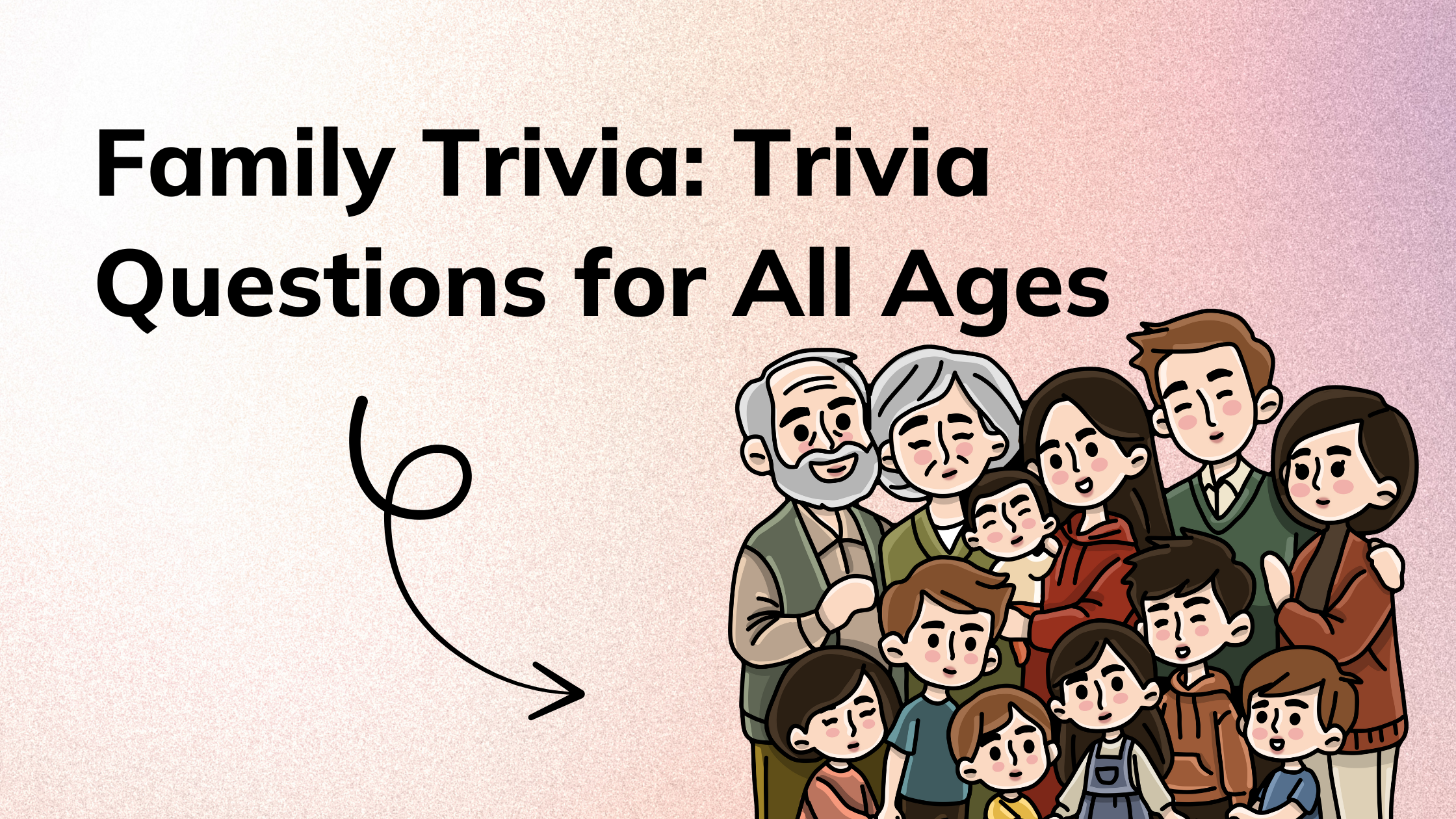
Family trivia is a type of trivia game made for mixed-age groups so kids, teens, and adults can all play at the same time.
Instead of testing who knows the most facts, it focuses on shared thinking and familiar topics. The questions are designed to spark guesses, conversations, and laughs, not pressure or competition.
That usually means:
- Questions that work across age groups
- Topics families already recognize
- Gameplay that feels light, fun, and inclusive
Family Trivia Questions (Ready-to-Play)
The questions below are grouped by category so you can adjust the game based on who’s playing and how the room feels.
Each category is meant to keep the game moving, easy enough for younger players to jump in, but familiar enough to hold everyone else’s attention.
You don’t need to use every category. Pick one that fits the moment and keep going
General Knowledge
When to use this category:
This round works best at the start of the game or when new players join. The questions rely on everyday knowledge, so younger players can guess confidently while older players don’t feel like they’re waiting around.
Q: Which planet in our solar system is known as the Red Planet because of its color? [Easy 🟢]
A: Mars
Q: How many days make up a full week on the calendar? [Easy 🟢]
A: Seven
Q: What animal is often called “man’s best friend” because of its loyalty? [Easy 🟢]
A: Dog
Q: What geometric shape has three sides and three angles? [Easy 🟢]
A: Triangle
Q: When you mix the primary colors red and yellow, what new color is created? [Easy 🟢]
A: Orange
Q: Which European country is famous for dishes like pizza, pasta, and gelato? [Medium 🟠]
A: Italy
Q: How many legs does a spider have in total? [Medium 🟠]
A: Eight
Q: What sweet food do bees produce using nectar from flowers? [Easy 🟢]
A: Honey
Q: What is the name of the planet that humans live on? [Easy 🟢]
A: Earth
Q: Which season comes right after summer in many parts of the world? [Medium 🟠]
A: Fall (Autumn)
Movies & TV
When to use this category:
This round works best once everyone is settled in. Familiar characters make this round easy to jump into and usually spark quick reactions.
Q: What movie features a snowman named Olaf? [Easy 🟢]
A: Frozen
Q: Which movie is about toys that come to life when humans aren’t around? [Easy 🟢]
A: Toy Story
Q: What color is Shrek? [Easy 🟢]
A: Green
Q: What movie features a talking fish searching for his missing son? [Easy 🟢]
A: Finding Nemo
Q: What superhero wears a cape and is known for flying? [Easy 🟢]
A: Superman
Q: Which movie series is set in a magical school for wizards? [Medium 🟡]
A: Harry Potter
Q: What animated movie explores emotions like joy, sadness, and anger inside a child’s mind? [Medium 🟡]
A: Inside Out
Q: What movie features a young lion named Simba? [Easy 🟢]
A: The Lion King
Q: What TV show features an animated family living in a yellow house? [Medium 🟡]
A: The Simpsons
Q: What is the name of the fictional city where The Simpsons live? [Hard 🔴]
A: Springfield
Animal & Nature
When to use this category:
This category works especially well when younger kids are present or when you want to slow the pace slightly without losing engagement.
Q: What animal is known for its long neck? [Easy 🟢]
A: Giraffe
Q: Which animal says “moo”? [Easy 🟢]
A: Cow
Q: What do caterpillars turn into? [Easy 🟢]
A: Butterflies
Q: Where do fish live? [Easy 🟢]
A: In water
Q: What animal is known as the king of the jungle? [Easy 🟢]
A: Lion
Q: What bird cannot fly and lives in cold places? [Easy 🟢]
A: Penguin
Q: What do plants need to grow? [Medium 🟡]
A: Sunlight and water
Q: Which animal has a shell and moves very slowly? [Easy 🟢]
A: Turtle
Q: What animal hops and carries babies in a pouch? [Easy 🟢]
A: Kangaroo
Q: What animal sleeps standing up and can lock its legs to avoid falling? [Hard 🔴]
A: Horse
Food & Everyday Life
When to use this category:
This category works especially well after dinner or during a relaxed part of the game. These questions feel familiar and comforting, which helps younger players stay confident while older players don’t feel bored.
Q: What fruit is yellow and monkeys love? [Easy 🟢]
A: Banana
Q: What food do you blow out candles on? [Easy 🟢]
A: Cake
Q: What drink comes from cows? [Easy 🟢]
A: Milk
Q: What food is made from dough, cheese, and sauce? [Easy 🟢]
A: Pizza
Q: What meal do people usually eat in the morning? [Easy 🟢]
A: Breakfast
Q: What vegetable makes you cry when you cut it? [Easy 🟢]
A: Onion
Q: What sweet treat is made from cocoa? [Medium 🟡]
A: Chocolate
Q: What food do bees help make? [Easy 🟢]
A: Honey
Q: What do you call food cooked on a grill? [Medium 🟡]
A: Barbecue
Q: What is the name of the process that turns milk into cheese? [Hard 🔴]
A: Fermentation
School & Learning
When to use this category:
This round works well mid-game, once everyone is warmed up. The questions feel familiar without being childish, making them ideal for mixed-age groups.
Q: What subject involves numbers and equations? [Easy 🟢]
A: Math
Q: What do you use to write on a chalkboard? [Easy 🟢]
A: Chalk
Q: What season does the school year usually start in? [Medium 🟡]
A: Fall
Q: What do you call a place full of books? [Easy 🟢]
A: Library
Q: What subject teaches about the past? [Easy 🟢]
A: History
Q: What do students use to carry books to school? [Easy 🟢]
A: Backpack
Q: What subject includes experiments and discoveries? [Easy 🟢]
A: Science
Q: What tool tells time? [Easy 🟢]
A: Clock
Q: What do you call the person who teaches a class? [Easy 🟢]
A: Teacher
Q: What day usually comes after Friday? [Easy 🟢]
A: Saturday
Home & Daily Life
When to use this category:
This round works best when you want to slow things down and keep everyone involved, especially if younger kids or quieter players are present.
Q: What room in a house is used for cooking? [Easy 🟢]
A: Kitchen
Q: What do people usually sleep on at night? [Easy 🟢]
A: Bed
Q: What appliance keeps food cold? [Easy 🟢]
A: Refrigerator
Q: What do you use to clean the floor? [Medium 🟡]
A: Broom or vacuum
Q: What room usually has a sofa and a TV? [Easy 🟢]
A: Living room
Q: What item do people use to wash dishes? [Easy 🟢]
A: Soap
Q: What do people wear indoors to stay comfortable? [Easy 🟢]
A: Clothes
Q: What do you turn on when a room is dark? [Easy 🟢]
A: Lights
Q: What do families usually eat together in the evening? [Easy 🟢]
A: Dinner
Q: What do people lock when leaving the house? [Easy 🟢]
A: Door
Music, Games & Hobbies
When to use this category: Use this round when you want to shift away from trivia mode and into shared interests. These questions invite recognition and personal connection, making them easy for all ages to enjoy without pressure.
Q: What musical instrument has black and white keys? [Easy 🟢]
A: Piano
Q: What game uses a board and pieces? [Easy 🟢]
A: Board game
Q: What hobby involves taking pictures? [Easy 🟢]
A: Photography
Q: What game uses a ball and a hoop? [Easy 🟢]
A: Basketball
Q: What activity involves reading books? [Easy 🟢]
A: Reading
Q: What hobby involves drawing or painting? [Easy 🟢]
A: Art
Q: What game do people play with cards? [Easy 🟢]
A: Card game
Q: What musical instrument do you strum? [Medium 🟡]
A: Guitar
Q: What indoor game is played on a table with paddles? [Medium 🟡]
A: Table tennis
Q: What hobby involves building things with blocks? [Medium 🟡]
A: Building or construction play
Travel, Places & Around the World
When to use this category:
This round invites imagination. It works well when players are comfortable and curious, because people often picture places they’ve visited or want to visit.
Q: What do people pack when going on a trip? [Easy 🟢]
A: Luggage
Q: What place do airplanes take off from? [Easy 🟢]
A: Airport
Q: What do you call a place where people stay on vacation? [Easy 🟢]
A: Hotel
Q: What large body of water covers most of the Earth? [Medium 🟡]
A: Ocean
Q: What do you use to find places on a trip? [Easy 🟢]
A: Map
Q: What country is famous for the Eiffel Tower? [Easy 🟢]
A: France
Q: What do people wear to protect their eyes on sunny trips? [Easy 🟢]
A: Sunglasses
Q: What vehicle runs on tracks and carries passengers? [Medium 🟡]
A: Train
Q: What do people need to travel to another country? [Easy 🟢]
A: Passport
Q: In which country do people drive on the left side of the road instead of the right? [Hard 🔴]
A: United Kingdom
Holidays, Traditions & Celebrations
When to use this category:
This round taps into shared memories rather than facts. It works best when people are already comfortable talking, because answers often lead to quick stories or traditions being shared.
Q: What holiday is celebrated with cake and candles? [Easy 🟢]
A: Birthday
Q: What holiday is known for gifts and decorations? [Easy 🟢]
A: Christmas
Q: What holiday involves costumes and candy? [Easy 🟢]
A: Halloween
Q: What holiday celebrates the start of a new year? [Easy 🟢]
A: New Year
Q: What do people often decorate during holidays? [Easy 🟢]
A: Homes
Q: What holiday is celebrated with family meals and thanks? [Medium 🟡]
A: Thanksgiving
Q: What do people sing during birthday celebrations? [Easy 🟢]
A: Birthday song
Q: What do families often do during celebrations? [Easy 🟢]
A: Spend time together
Q: What item is often wrapped before giving? [Easy 🟢]
A: Gift
Q: What holiday is traditionally associated with ringing in the New Year at midnight? [Hard 🔴]
A: New Year’s Eve
Geography
When to use this category:
This round works well toward the later part of the game, once players are comfortable thinking a little longer before answering.
Q: What is the largest continent in the world? [Easy 🟢]
A: Asia
Q: What ocean is the largest on Earth? [Medium 🟡]
A: Pacific Ocean
Q: What country is home to the Eiffel Tower? [Easy 🟢]
A: France
Q: What is the name of the longest river in the world? [Medium 🟡]
A: Nile River
Q: What country is known for the Great Wall? [Easy 🟢]
A: China
Q: What is the capital city of the United Kingdom? [Easy 🟢]
A: London
Q: What continent is the Sahara Desert located on? [Medium 🟡]
A: Africa
Q: What country is famous for pizza and pasta? [Easy 🟢]
A: Italy
Q: What ocean lies between Africa and Australia? [Medium 🟡]
A: Indian Ocean
Q: Which continent has the most countries? [Hard 🔴]
A: Africa
How to Play Family Trivia
There’s no perfect way to play family trivia. It usually starts with someone reading a question out loud and everyone leaning in to guess. From there, you can play it a few different ways depending on the group.
Shout-Out Mode (fast and energetic)
Read a question out loud and let anyone call out an answer when they’re ready. This works well with smaller groups or when energy is high. Keep it light the first confident answer can count, or you can pause and discuss before revealing the answer.
Team Mode (kids + adults)
Split players into mixed-age teams so kids and adults work together. Give each team a few seconds to talk quietly before answering. This helps younger players feel supported and keeps the game balanced without making it competitive.
No-Pressure Mode (no wrong answers)
Read each question and invite guesses or thoughts without worrying about being correct. Use the answers as conversation starters rather than scores. This mode is ideal for younger kids, shy players, or groups that just want to relax and enjoy the game.
A quick tip: You can switch between modes at any time. If the group gets loud, move to teams. If attention drops, try shout-out mode. The goal is always participation, not points
Tips for Hosting Better Family Trivia
If you’re running trivia for a group, keep these tips in mind:
- Focus on shared fun, not winning
- Mix question styles to suit different ages
- Keep the pace relaxed and welcoming
When done right, family trivia feels less like a quiz and more like a group activity everyone wants to join.
Why Interactive Trivia Works Better Than Traditional Trivia
Traditional trivia usually follows the same pattern: someone reads a question, a few confident voices answer, and everyone else waits. Over time, that slows the pace and quietly pushes some people out of the game.
Interactive trivia works better because it’s built around how groups actually behave, especially mixed-age groups.
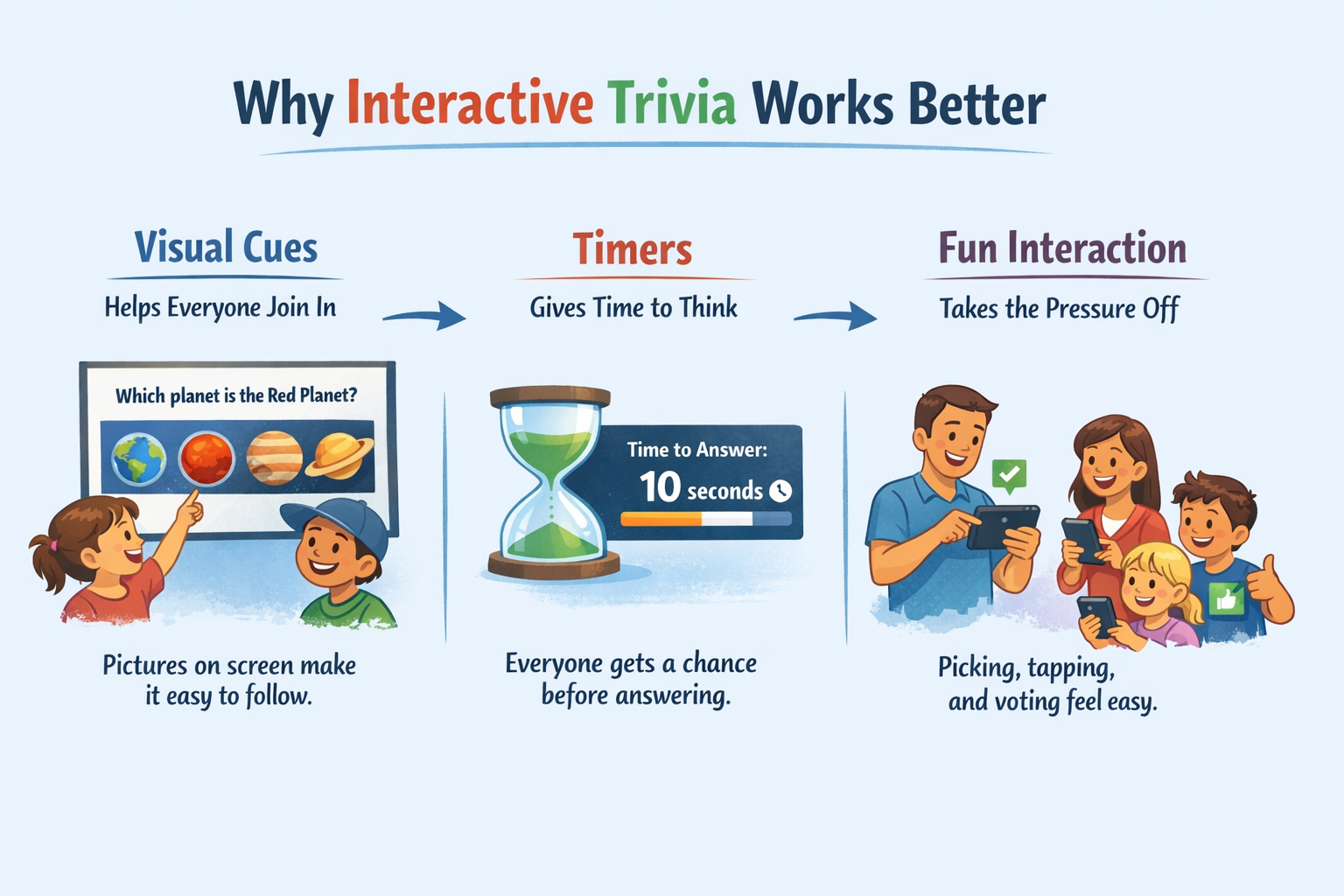
1. Visual cues help non-readers stay involved
When questions appear on screen with clear visuals, younger kids and early readers don’t have to rely on someone reading everything aloud.
2. Timers stop adults from dominating
Without structure, adults tend to answer first, not on purpose, but because they’re quicker to respond. Timers create a pause that gives everyone the same thinking time. That small delay makes space for kids to guess, teams to talk, and quieter players to join in.
3. Interaction removes pressure
When players tap, vote, or choose instead of speaking up immediately, the game feels less like a test. Interaction shifts the focus from “getting it right” to “being part of it,” which is especially important in family trivia where confidence levels vary.
What interactive family trivia should look like
A good interactive trivia round feels easy to follow. One question appears at a time, everyone gets a moment to think, and the reactions come naturally, guessing, laughing, or changing their minds. No one feels rushed or pressured to answer first, and the pace stays relaxed.
This is also what makes the format easier to run. Instead of reading questions out loud, watching the clock, and managing the flow yourself, the structure does that work for you.
Turning a set of family trivia questions into this kind of experience is usually the hardest part, and tools like Trivia by Typito AI help reduce that friction by presenting questions visually with clear timing and interaction. That way, the host can focus on the people in the room instead of managing the game.
Start with Trivia by Typito AI
Frequently Asked Questions (FAQs)
What is family trivia?
Family trivia is a game format designed for people of different ages to play together. The questions are easy to understand, encourage guessing, and don’t rely on deep or specialized knowledge. The goal is shared participation, where everyone feels comfortable answering and staying involved throughout the game.
What age group is family trivia suitable for?
Family trivia works best for mixed-age groups that include children, teens, and adults. The questions are written so younger players can follow along and guess confidently, while older players still stay interested through familiar topics and group discussion.
Are family trivia questions educational?
Family trivia can support learning in a natural way. Players often talk through answers, explain ideas, or connect questions to real-life experiences. This helps reinforce general knowledge without turning the game into a lesson or creating pressure to be correct.
How many questions should a family trivia game have?
Most family trivia games work well with 10 to 20 questions per round. This keeps the pace steady and helps maintain attention. Shorter rounds make it easier to adjust energy levels or switch categories without the game feeling too long.
How do you make family trivia fun?
Family trivia is more enjoyable when the focus stays on participation rather than winning. Let people guess freely, keep the pace relaxed, and allow conversation between questions. Mixing easy and medium questions helps everyone stay involved and keeps the experience light.
What makes good trivia for mixed ages?
Good trivia for mixed ages uses familiar topics, simple wording, and questions that allow room for guessing. It avoids technical details and instead focuses on shared experiences. The best questions spark discussion, helping players of different ages contribute naturally.