At a glance: 6 strategies to create meaningful engagement this February
Designed for educators, community organizers, and facilitators looking to create respectful, participatory learning experiences.
Jump to a section:
- 25 Black History Month trivia questions
- Black History Month game ideas for different settings
- How to turn Black History Month trivia into interactive videos
- Tips for creating respectful & engaging Black History content
- FAQs about Black History Month trivia & games
Every February, educators and community leaders face a similar challenge: How do we honor Black History Month in a way that feels genuine, not performative?
You want to move beyond static quotes and surface-level facts. You want to spark real dialogue and connection.
The solution often lies in participation. When people actively engage with history through Black History Month trivia and interactive games.
Whether you're hosting a quiz in class, managing a remote team, or organizing a community event, educational trivia games bridge the gap between education and engagement.
Here's how to create respectful, high-impact trivia experiences that celebrate Black history and culture.
What Makes Black History Month Trivia Different From Traditional Quizzes?
Black History Month trivia is an interactive educational activity designed to test knowledge, spark curiosity, and highlight the contributions of Black individuals throughout history.
Unlike a standard test, this type of trivia isn't about "getting it right" or "getting it wrong." It's a vehicle for storytelling. It serves as an entry point to discuss civil rights, arts, STEM innovations, and cultural milestones that are often overlooked in standard curriculums.
Tactical Takeaway:
Frame it as "Discovery," not "Testing." When introducing the activity, say: "We're going to explore some incredible stories today," rather than "Let's see how much you know." This lowers anxiety and increases participation.
Why Black History Month Games Work for Learning & Community Building
Static posts on social media or bulletin boards are easily scrolled past. Black History Month games require attention.
When you gamify history, you aren't trivializing it, you're making it accessible. Here's why interactive formats work better than lectures or reading lists:
● Active participation increases retention: People remember what they do far better than what they read. For example, a student who answers "Katherine Johnson calculated trajectories for NASA" will recall that fact weeks later, while someone who simply read it in a textbook may forget it by the next day.
● Games create a safe space: A low-stakes game environment allows people to admit what they don't know without shame, opening the door for learning.
● Shared discovery builds community: When a team learns a surprising fact together, it creates a shared moment of appreciation.
Tactical Takeaway:
Use the "Did You Know?" Bridge. After a player answers a question, always follow up with one sentence of context before moving to the next question. This ensures the focus remains on the history, not just the score.
25 Black History Month Trivia Questions (Organized by Theme)
These Black history trivia questions are organized by theme to help you create well-rounded educational trivia games for any setting.
Trailblazers & Pioneers (Difficulty: Easy to Medium)
Q1. Who was the first Black woman elected to the United States Congress? Answer: Shirley Chisholm (1968)
Q2. Who is known as the "Father of Black History"? Answer: Carter G. Woodson
Q3. Which Supreme Court Justice was the lead lawyer for the NAACP in Brown v. Board of Education? Answer: Thurgood Marshall
Q4. Who was the first African American to serve as U.S. Secretary of State? Answer: Colin Powell
Q5. Who was the first Black person to win a Nobel Peace Prize?
Answer: Ralph Bunche (1950)
Creator Tip: These questions work well as icebreakers. Mix one "first" question with a contemporary figure to show continuity across generations.
Arts, Culture & Entertainment (Difficulty: Easy)
Q6. Who wrote the poem "The Hill We Climb" performed at the 2021 Presidential Inauguration? Answer: Amanda Gorman
Q7. Who was the first African American to win an Academy Award? Answer: Hattie McDaniel (Gone with the Wind)
Q8. Which Harlem Renaissance poet wrote "The Negro Speaks of Rivers"? Answer: Langston Hughes
Q9. Who is the most awarded female artist in Grammy history? Answer: Beyoncé
Q10. Who painted the official presidential portrait of Barack Obama?
Answer: Kehinde Wiley
Creator Tip: Use these questions to celebrate joy and creativity. Pair them with audio clips or images to make the experience multisensory.
Civil Rights Movement** (Difficulty: Medium to Hard)
Q11. In what year was the Civil Rights Act signed into law? Answer: 1964
Q12. Who refused to give up her seat on a bus in Montgomery, Alabama, nine months before Rosa Parks? Answer: Claudette Colvin
Q13. Which organizer was the chief architect of the 1963 March on Washington? Answer: Bayard Rustin
Q14. What city is home to the Edmund Pettus Bridge, site of the "Bloody Sunday" march? Answer: Selma, Alabama
Q15. Who founded the Children's Defense Fund and was the first Black woman admitted to the Mississippi Bar?
Answer: Marian Wright Edelman
Creator Tip: These questions require more context. Always follow up with "Did you know?" moments that explain the broader impact of these movements and figures.
STEM & Innovation (Difficulty: Medium)
Q16. Which mathematician's calculations were critical to the success of the first U.S. crewed spaceflights? Answer: Katherine Johnson
Q17. Who invented the three-position traffic signal? Answer: Garrett Morgan
Q18. Who was the first Black woman to travel into space? Answer: Mae Jemison
Q19. Who developed the method for processing and storing blood plasma (blood banks)? Answer: Charles Drew
Q20. Who invented the first home security system involving video surveillance?
Answer: Marie Van Brittan Brown
Creator Tip: STEM questions surprise people the most. Use these to challenge the "I didn't learn this in school" narrative and spark conversations about whose contributions get remembered.
Contemporary Black Excellence (Difficulty: Easy to Medium)
Q21. Who is the gymnast with the most World Championship medals in history? Answer: Simone Biles
Q22. Who became the first Black woman to own a television network (OWN)? Answer: Oprah Winfrey
Q23. Which film director became the first African American to win Best Director for Moonlight? Answer: Barry Jenkins
Q24. Who is the youngest executive producer in Hollywood history (for the film Little)? Answer: Marsai Martin
Q25. Who was the first Black president of an Ivy League university (Brown University)?
Answer: Ruth Simmons
Creator Tip: These questions show that Black excellence is happening right now. Use them to close your trivia on an uplifting, forward-looking note.
How to Adapt Black History Month Trivia for Classrooms, Teams, and Community Events
Different environments require different formats for classroom history games and community activities. Here's how to adapt these questions for your specific group.
Classroom Games for Students
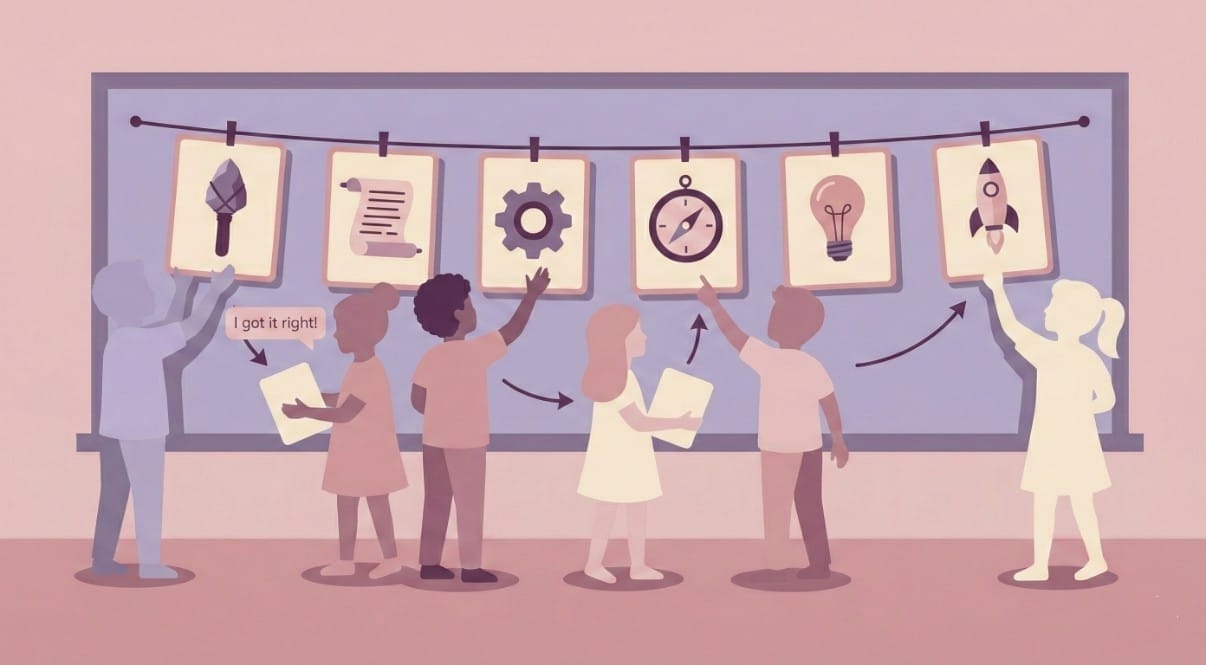
Format: "Timeline Challenge"
What you need: Printed photos of historical figures and a clothesline or whiteboard.
How to run it: Give students photos of historical events or figures. Ask them to work together to place them in the correct chronological order physically in the room.
Workplace Team Activities
Format: "Fact or Fiction" (Slack/Teams Edition)
What you need: A messaging channel.
How to run it: Post a statement about a Black inventor or historical event. Ask the team to react with a ‘✅’ for Fact or ‘❌’ for Fiction. Reveal the answer and the full story in the thread. This allows for asynchronous participation during busy workdays.
Community Events & Gatherings
Format: "Who Am I?" Mixer
What you need: Sticky notes.
How to run it: Write the name of a historical figure on a sticky note and place it on a guest's back. They must ask other guests yes/no questions to figure out who they are. It breaks the ice and sparks conversation about the figures.
Social Media Engagement Formats
Format: "This or That" Trivia Stories
What you need: Instagram/Facebook Stories "Poll" sticker.
How to run it: Post a question using the Poll feature.
- Example: "Who invented the Super Soaker?"
- Option A: Lonnie Johnson
- Option B: George Washington Carver
- Follow up the next slide with a video explaining the answer.
Tactical Takeaway:
Transition to conversation. Don't just end the game. Ask: "Which of these facts surprised you the most?" or "Who on this list would you want to have dinner with?"
How to Turn Black History Month Trivia Into Interactive Videos
Video trivia reaches 3x more people than text posts. According to platform data, educational quiz videos see 67% higher completion rates on Instagram and TikTok when they include a countdown timer and answer reveal. Video formats also perform better in algorithms because they keep viewers watching until the payoff moment.
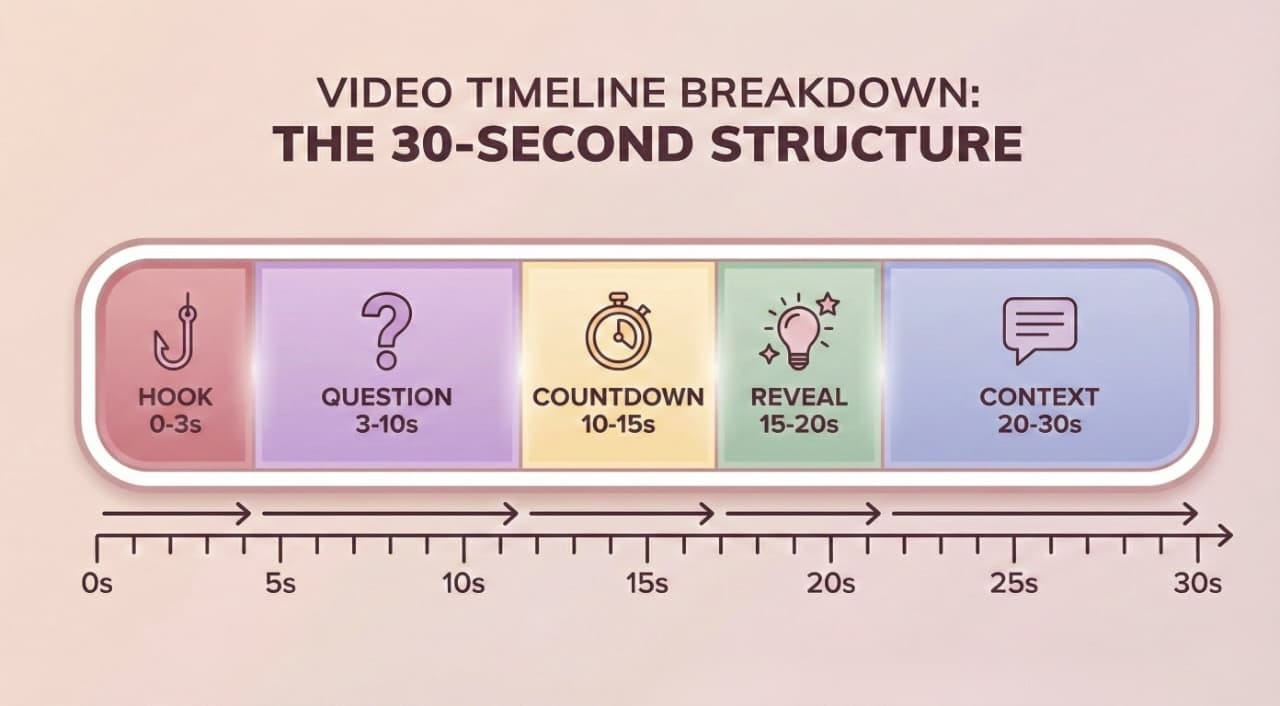
How to Structure a Trivia Video So Viewers Stay Until the Answer
- The Hook (0-3s): "I bet you didn't know who invented this..." or "Black History Trivia Challenge: Level Hard."
- The Question (3-10s): Read the question clearly. Display text on screen.
- The Countdown (10-15s): Visual timer or "Think about it..." moment.
- The Reveal (15-20s): Show the answer with a photo of the figure.
- The Context (20-30s): "She didn't just do X, she also did Y..."
How to Create Consistent Trivia Videos Without Burning Out
The hardest part of Black History Month content isn't ideas, it's keeping up the pace.
Most educators and community managers start February with good intentions: daily trivia, short videos, consistent engagement. By week two, the editing backlog hits, templates are scattered, and content slows down.
The fix isn't working harder. It's removing repeat work.
Instead of building every trivia video from scratch, high-output creators rely on one reusable format they can deploy again and again. That's where a template-first workflow makes the difference.
With Trivia by Typito AI, you can generate complete trivia videos from a single prompt, including questions, countdown timers, visuals, music, and voiceover, and then reuse the same structure throughout the month.
Here's what that unlocks in practice:
- One consistent trivia layout that viewers recognize
- Faster production without sacrificing quality
- Less decision fatigue when posting daily
- More energy spent on discussion and learning, not editing
For educators creating classroom history games, Typito's education-ready templates make it possible to produce polished, accessible videos even with zero editing experience.
Tactical Takeaway: Build once. Reuse all month.
Create one "Trivia Layout" with your colors, fonts, and tone. Then simply swap the question, image, and answer for each new post. This approach makes daily February content sustainable, not stressful.
Tips for Creating Respectful & Engaging Black History Content
When creating content for Black History Month, intent matters, but impact matters more. Here's how to ensure your trivia and games land correctly.
Research and cite sources
Misinformation spreads fast. Double-check every fact. If you're sharing a quote, ensure the person actually said it.
Avoid tokenism and oversimplification
Don't just focus on slavery or the Civil Rights Movement. Black history is vast. Celebrate joy, innovation, art, and ancient history. Ensure your content reflects the full spectrum of the Black experience.
Center stories, not just facts
A date is a fact; a struggle or triumph is a story. Connect the trivia answer to a human emotion or motivation. Include short information nuggets about the story behind facts and where they could read more.
Extend engagement beyond February
The best time to post Black history trivia questions? March 1st. Show your community that this history is relevant year-round.
Tactical Takeaway:
The Pre-Launch Checklist. Before posting, ask:
- Is this fact accurate?
- Does the image respectfully represent the person?
- Is the tone educational and celebratory?
- Am I inviting conversation?
Still have questions? Let's answer a few of those
Question: What is a fun activity for Black History Month?
Answer: Hosting a "multimedia trivia night" is a great activity. Combine music clips (guess the Black artist), movie scenes (name the film), and historical facts. It engages different senses and celebrates culture alongside history.
Question: How do you celebrate Black History Month virtually?
Answer: Virtual celebrations work best with interactive content. Use poll features in Zoom, create asynchronous quiz challenges in Slack, or host a "watch party" of a documentary followed by a guided discussion. You can also create shareable trivia videos using Typito's video maker that participants can engage with at their own pace.
Question: What are good trivia questions for Black History Month?
Answer: Good Black history trivia questions mix difficulty levels and subjects. Include "trailblazers" (firsts), "pop culture" (music/movies), and "innovations" (inventions we use daily). This ensures everyone can participate regardless of their history knowledge.
Question: How do I make Black History Month trivia respectful?
Answer: Focus on accuracy and dignity. Avoid trivializing painful historical events. Celebrate achievements and resilience rather than gamifying trauma. Always provide context after the answer so it becomes a learning moment.
Question: What age groups are these games appropriate for?
Answer: The questions listed above are generally appropriate for middle school through adulthood. For younger children (K-5), focus on visual identification games (e.g., "Who is this astronaut?") and simplify the biographical details.
Question: Can I use Black History Month content year-round?
Answer: Absolutely. Limiting Black history to February is a common mistake. Using these educational trivia games in June (Juneteenth), August (Black Philanthropy Month), or randomly throughout the year normalizes Black history as American history.
Question: Where can I find accurate Black History information?
Answer: Reliable sources include the National Museum of African American History and Culture (NMAAHC), The Library of Congress, and biography.com. Avoid unverified social media memes as primary sources.
Question: What's the easiest way to create video trivia for social media?
Answer: Use an AI-powered video creation tool like Typito that can generate complete trivia videos from a single prompt. This saves hours compared to traditional video editing software and requires no technical skills.
Turn Your Black History Month Trivia Into Engaging Video Content
Turn Your Black History Month Trivia Into Engaging Video Content
You're all set to create Black History Month trivia that's thoughtful, engaging, and genuinely meaningful.
I hope the ideas in this guide helped you move beyond surface-level posts and create moments people actually remember.
If you decide to turn your trivia into short videos, interactive formats can make those stories easier to share and revisit, during February and throughout the year. Tools like Trivia by Typito AI can help streamline that process when you want a faster, more consistent way to bring your questions to life, but the heart of the experience always comes from how you frame and facilitate the conversation.
However you choose to use it, the goal stays the same: invite curiosity, celebrate Black excellence, and keep the learning going well beyond one month.
Explore Trivia by Typit AI to help you bring your Trivia's alive